> ## Documentation Index
> Fetch the complete documentation index at: https://companyname-a7d5b98e-653-debug-page-doesnt-open.mintlify.site/llms.txt
> Use this file to discover all available pages before exploring further.
# NFT: How it Works
In TON there is a collection smart contract and a separate smart contract for every NFT item — each item is its own contract see more [why](/techniques/contract-sharding).
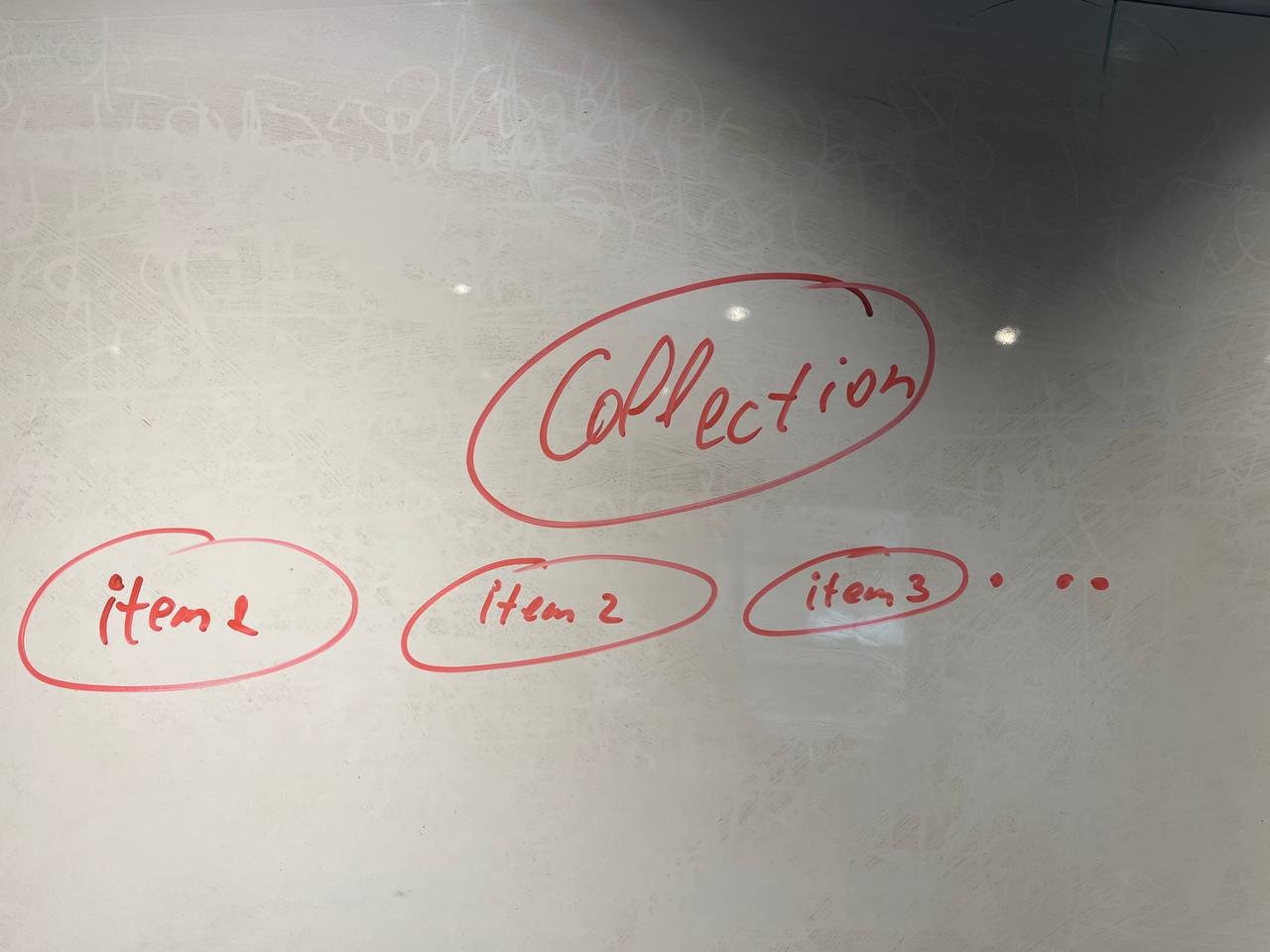 Each NFT knows its collection, its index, and its item-specific part of the [metadata](/standard/tokens/metadata). The initial owner is assigned by the collection.
## NFT deployment
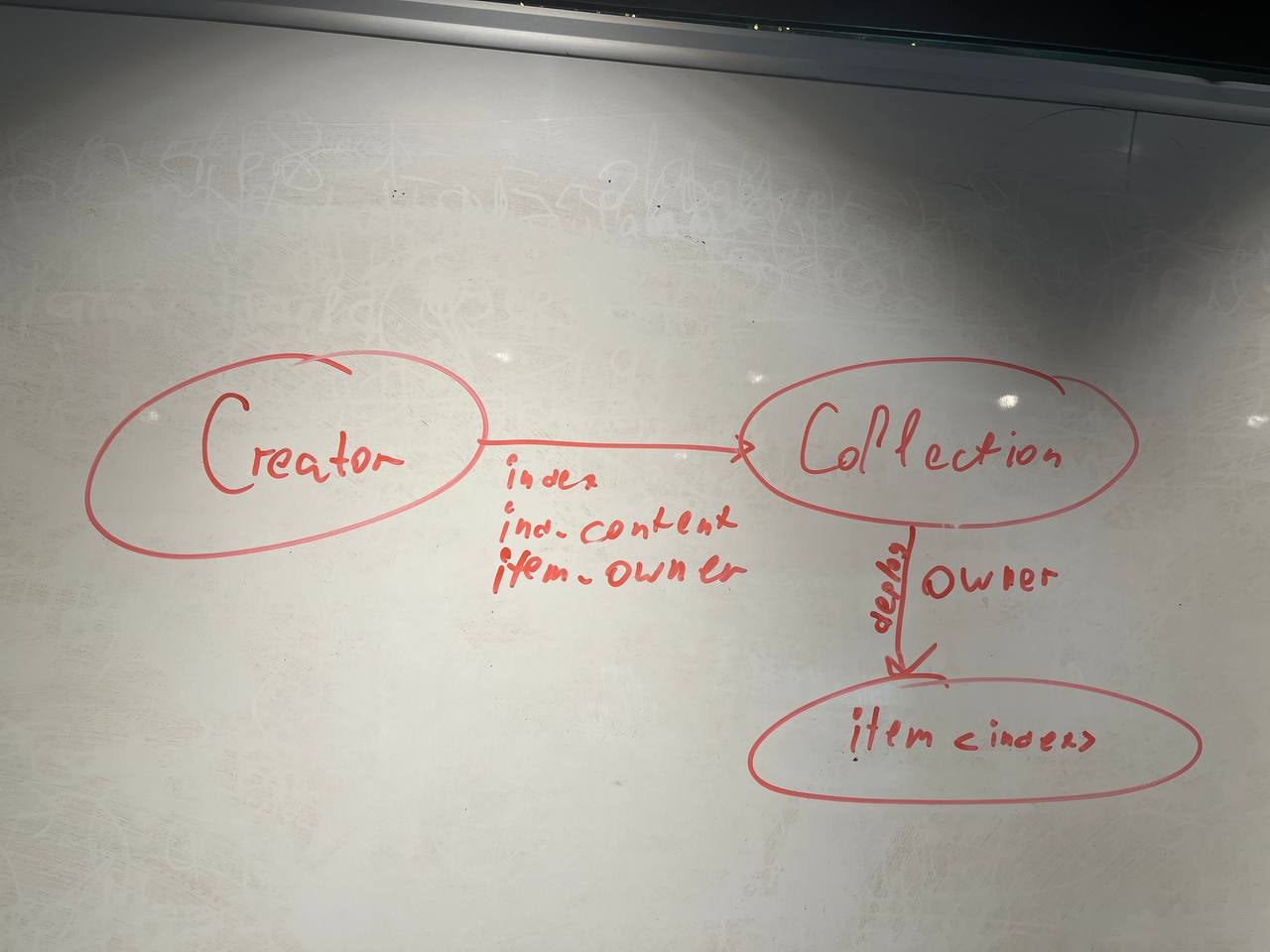
The collection deploys NFT items with the initial owner and the item-specific metadata.
Each NFT knows its collection, its index, and its item-specific part of the [metadata](/standard/tokens/metadata). The initial owner is assigned by the collection.
## NFT deployment
The collection deploys NFT items with the initial owner and the item-specific metadata.
 ## How to verify an NFT belongs to a collection?
### High level
You can do it with a single request:
```ts TypeScript theme={null}
const itemAddress = "EQD3LzasMd4GAmhIEkCQ4k6LnziTqNZ6VPtRfeZKHu0Fmkho";
const collectionAddress = "EQCOtGTvX-RNSaiUavmqNcDeblB3-TloZpvYuyGOdFnfy-1N";
const url = `https://toncenter.com/api/v3/nft/items?limit=1&address=${itemAddress}&collection_address=${collectionAddress}`;
const options = { method: "GET", body: undefined };
try {
const response = await fetch(url, options);
const data = await response.json();
if (data["nft_items"].length > 0) {
console.log("✅ item in collection");
} else {
console.log("❌ item not in collection");
}
} catch (error) {
console.error(error);
}
```
### Low level
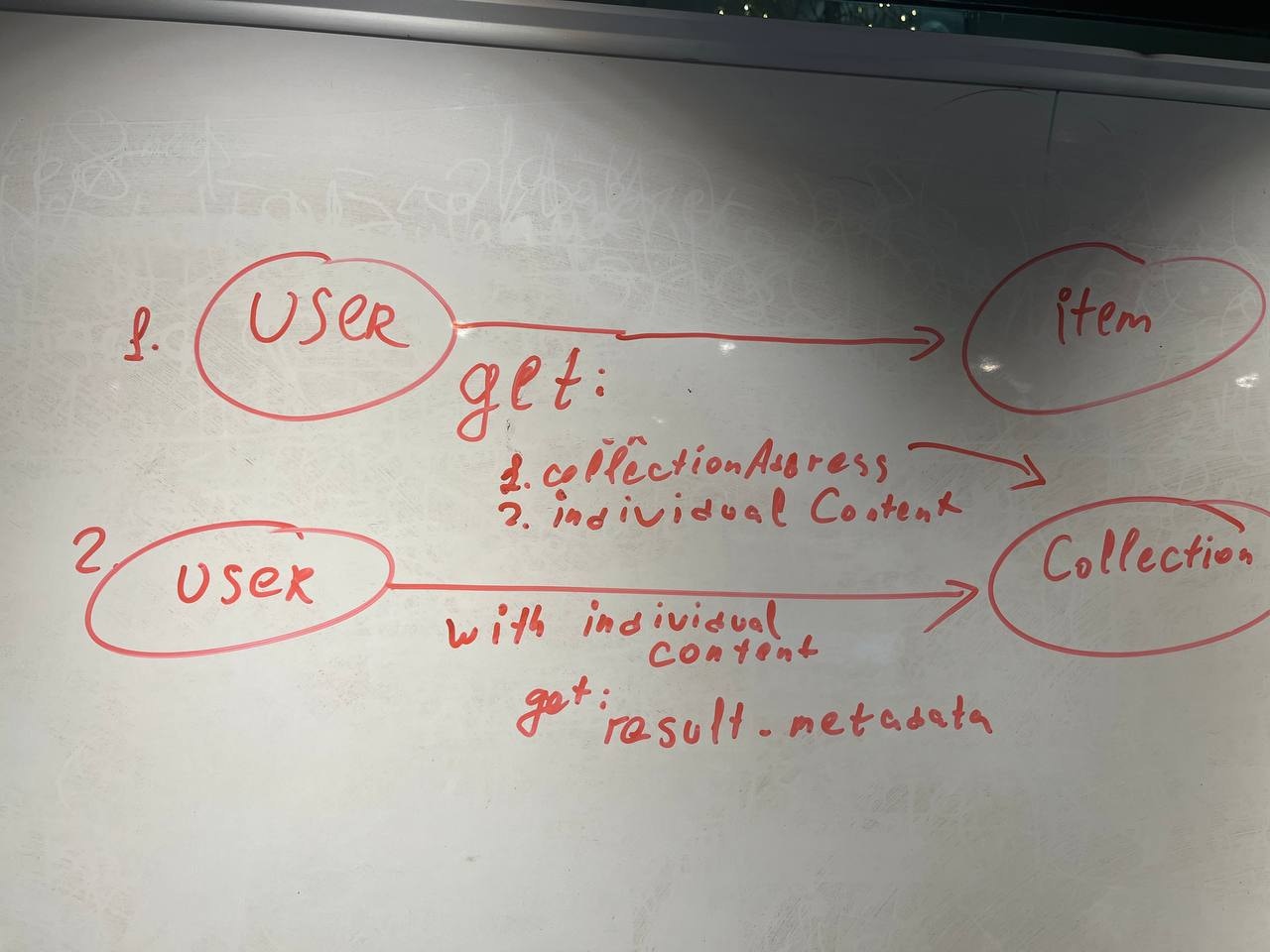
First read the NFT item index. If the collection, for that index, returns the same NFT item address, the item belongs to the collection.
```ts TypeScript theme={null}
const itemAddress = "EQD3LzasMd4GAmhIEkCQ4k6LnziTqNZ6VPtRfeZKHu0Fmkho";
const collectionAddress = "EQCOtGTvX-RNSaiUavmqNcDeblB3-TloZpvYuyGOdFnfy-1N";
const url = "https://toncenter.com/api/v2/runGetMethod";
const itemPayload = {
address: itemAddress,
stack: [] as any[],
method: "get_nft_data",
};
const headers = {
"Content-Type": "application/json",
};
try {
const itemResp = await fetch(url, {
method: "POST",
headers,
body: JSON.stringify(itemPayload),
});
if (!itemResp.ok) {
throw new Error(
`Item request failed: ${itemResp.status} ${itemResp.statusText}`,
);
}
const itemJson: any = await itemResp.json();
const itemStack = itemJson?.result?.stack;
if (!Array.isArray(itemStack) || !Array.isArray(itemStack[1])) {
throw new Error("Unexpected item stack format");
}
const hex = String(itemStack[1][itemStack[1].length - 1] ?? "");
const itemIndex = Number.parseInt(
hex.startsWith("0x") ? hex.slice(2) : hex,
16,
);
const collectionPayload = {
address: collectionAddress,
stack: [["int", itemIndex]],
method: "get_nft_address_by_index",
};
await new Promise((resolve) => setTimeout(resolve, 2000));
const colResp = await fetch(url, {
method: "POST",
headers,
body: JSON.stringify(collectionPayload),
});
if (!colResp.ok) {
throw new Error(
`Collection request failed: ${colResp.status} ${colResp.statusText}`,
);
}
const realAddress = await colResp.json();
console.log("itemIndex:", itemIndex);
const b64 = realAddress?.result?.stack?.[0][1].bytes as string;
console.log(b64);
const boc = Buffer.from(b64, "base64");
const cell = Cell.fromBoc(boc)[0];
const slice = cell.beginParse();
const resAddress = slice.loadAddress();
if (resAddress.toString() == Address.parse(itemAddress).toString()) {
console.log("✅ item in collection");
} else {
console.log("❌ item not in collection");
}
} catch (error) {
console.error(error);
}
```
## How to get full metadata of an NFT
### High level
[Playground link for metadata](/ecosystem/rpc/ton-center-v3/accounts/get-account-metadata?playground=open)
### Low level
Metadata is split into two parts: one part is stored on the item, another on the collection. We need to merge them.
To get metadata for an NFT of a particular index, first fetch the NFT item address from the collection, then read the item metadata, then combine it with the collection metadata to get the final result.
## How to verify an NFT belongs to a collection?
### High level
You can do it with a single request:
```ts TypeScript theme={null}
const itemAddress = "EQD3LzasMd4GAmhIEkCQ4k6LnziTqNZ6VPtRfeZKHu0Fmkho";
const collectionAddress = "EQCOtGTvX-RNSaiUavmqNcDeblB3-TloZpvYuyGOdFnfy-1N";
const url = `https://toncenter.com/api/v3/nft/items?limit=1&address=${itemAddress}&collection_address=${collectionAddress}`;
const options = { method: "GET", body: undefined };
try {
const response = await fetch(url, options);
const data = await response.json();
if (data["nft_items"].length > 0) {
console.log("✅ item in collection");
} else {
console.log("❌ item not in collection");
}
} catch (error) {
console.error(error);
}
```
### Low level
First read the NFT item index. If the collection, for that index, returns the same NFT item address, the item belongs to the collection.
```ts TypeScript theme={null}
const itemAddress = "EQD3LzasMd4GAmhIEkCQ4k6LnziTqNZ6VPtRfeZKHu0Fmkho";
const collectionAddress = "EQCOtGTvX-RNSaiUavmqNcDeblB3-TloZpvYuyGOdFnfy-1N";
const url = "https://toncenter.com/api/v2/runGetMethod";
const itemPayload = {
address: itemAddress,
stack: [] as any[],
method: "get_nft_data",
};
const headers = {
"Content-Type": "application/json",
};
try {
const itemResp = await fetch(url, {
method: "POST",
headers,
body: JSON.stringify(itemPayload),
});
if (!itemResp.ok) {
throw new Error(
`Item request failed: ${itemResp.status} ${itemResp.statusText}`,
);
}
const itemJson: any = await itemResp.json();
const itemStack = itemJson?.result?.stack;
if (!Array.isArray(itemStack) || !Array.isArray(itemStack[1])) {
throw new Error("Unexpected item stack format");
}
const hex = String(itemStack[1][itemStack[1].length - 1] ?? "");
const itemIndex = Number.parseInt(
hex.startsWith("0x") ? hex.slice(2) : hex,
16,
);
const collectionPayload = {
address: collectionAddress,
stack: [["int", itemIndex]],
method: "get_nft_address_by_index",
};
await new Promise((resolve) => setTimeout(resolve, 2000));
const colResp = await fetch(url, {
method: "POST",
headers,
body: JSON.stringify(collectionPayload),
});
if (!colResp.ok) {
throw new Error(
`Collection request failed: ${colResp.status} ${colResp.statusText}`,
);
}
const realAddress = await colResp.json();
console.log("itemIndex:", itemIndex);
const b64 = realAddress?.result?.stack?.[0][1].bytes as string;
console.log(b64);
const boc = Buffer.from(b64, "base64");
const cell = Cell.fromBoc(boc)[0];
const slice = cell.beginParse();
const resAddress = slice.loadAddress();
if (resAddress.toString() == Address.parse(itemAddress).toString()) {
console.log("✅ item in collection");
} else {
console.log("❌ item not in collection");
}
} catch (error) {
console.error(error);
}
```
## How to get full metadata of an NFT
### High level
[Playground link for metadata](/ecosystem/rpc/ton-center-v3/accounts/get-account-metadata?playground=open)
### Low level
Metadata is split into two parts: one part is stored on the item, another on the collection. We need to merge them.
To get metadata for an NFT of a particular index, first fetch the NFT item address from the collection, then read the item metadata, then combine it with the collection metadata to get the final result.
 ## NFT transfer
```ts wrap theme={null}
transfer(query_id, new_owner, response_destination, custom_payload, forward_amount, forward_payload)
```
### transfer parameters
| Parameter | Purpose | Value |
| ---------------------- | ------------------------------------------------------ | --------------------------------------------------- |
| `query_id` | Request identifier | Any number (e.g., timestamp or counter), usually 0 |
| `new_owner` | Address that should receive ownership | New owner address |
| `response_destination` | Where to send confirmation and excess | Address to receive confirmation/excess |
| `custom_payload` | Custom information passed to the NFT | Not used in standard NFTs; can be used by protocols |
| `forward_amount` | Amount to forward to the new owner with a notification | 0 if no notification; >0 to send notification |
| `forward_payload` | Message for the new owner | Any payload; leave empty if not required |
The NFT updates its owner field and now belongs to the new owner.
### Optional
To send a notification to the new owner from the NFT, set a positive `forward_amount`.
If you want to receive the excess (all remaining TON), set `response_destination` accordingly.
```mermaid theme={null}
sequenceDiagram
participant S as Sender (Current Owner)
participant N as NFT Item
participant R as Recipient (New Owner)
participant RD as Response Destination
S->>N: transfer request
N->>N: owner = new_owner
alt forward_amount > 0
N->>R: ownership_assigned
else forward_amount == 0
Note over N,R: No notification is sent
end
N->>RD: excesses(query_id)
```
## NFT sale
Often a sale contract is created. First, the sale contract becomes the owner; upon successful purchase, it transfers the NFT to the buyer.
```mermaid theme={null}
sequenceDiagram
participant O as Owner
participant SC as Sale Contract
participant B as Buyer
participant N as NFT Item
O->>N: transfer(SC address)
Note over SC: Becomes temporary owner
N->>SC: ownership assigned
B->>SC: pay price
SC->>N: transfer(B address)
N->>B: ownership assigned
SC->>O: payout proceeds
```
See more:
* NFT Standard [TEP-62](https://github.com/ton-blockchain/TEPs/blob/1fbc23cac69723c53251f686ec90d81bf0e83443/text/0062-nft-standard.md)
## Best practices
* Metadata referenced by each link should be permanent. If you need to change it, send a transaction that updates the reference.
## NFT transfer
```ts wrap theme={null}
transfer(query_id, new_owner, response_destination, custom_payload, forward_amount, forward_payload)
```
### transfer parameters
| Parameter | Purpose | Value |
| ---------------------- | ------------------------------------------------------ | --------------------------------------------------- |
| `query_id` | Request identifier | Any number (e.g., timestamp or counter), usually 0 |
| `new_owner` | Address that should receive ownership | New owner address |
| `response_destination` | Where to send confirmation and excess | Address to receive confirmation/excess |
| `custom_payload` | Custom information passed to the NFT | Not used in standard NFTs; can be used by protocols |
| `forward_amount` | Amount to forward to the new owner with a notification | 0 if no notification; >0 to send notification |
| `forward_payload` | Message for the new owner | Any payload; leave empty if not required |
The NFT updates its owner field and now belongs to the new owner.
### Optional
To send a notification to the new owner from the NFT, set a positive `forward_amount`.
If you want to receive the excess (all remaining TON), set `response_destination` accordingly.
```mermaid theme={null}
sequenceDiagram
participant S as Sender (Current Owner)
participant N as NFT Item
participant R as Recipient (New Owner)
participant RD as Response Destination
S->>N: transfer request
N->>N: owner = new_owner
alt forward_amount > 0
N->>R: ownership_assigned
else forward_amount == 0
Note over N,R: No notification is sent
end
N->>RD: excesses(query_id)
```
## NFT sale
Often a sale contract is created. First, the sale contract becomes the owner; upon successful purchase, it transfers the NFT to the buyer.
```mermaid theme={null}
sequenceDiagram
participant O as Owner
participant SC as Sale Contract
participant B as Buyer
participant N as NFT Item
O->>N: transfer(SC address)
Note over SC: Becomes temporary owner
N->>SC: ownership assigned
B->>SC: pay price
SC->>N: transfer(B address)
N->>B: ownership assigned
SC->>O: payout proceeds
```
See more:
* NFT Standard [TEP-62](https://github.com/ton-blockchain/TEPs/blob/1fbc23cac69723c53251f686ec90d81bf0e83443/text/0062-nft-standard.md)
## Best practices
* Metadata referenced by each link should be permanent. If you need to change it, send a transaction that updates the reference.